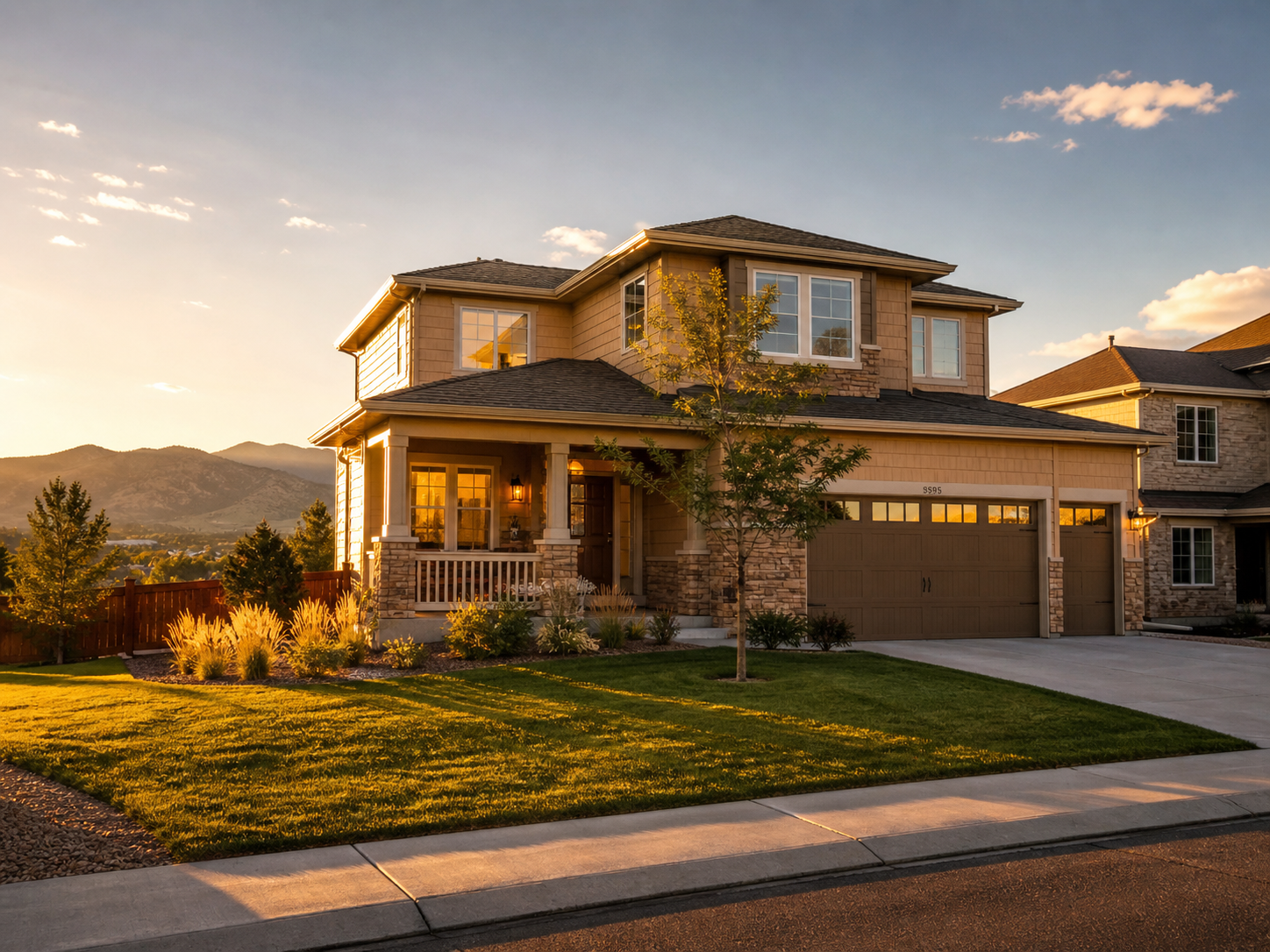
How Much Does a 1% Mortgage Rate Drop Really Save You in Littleton and Highlands Ranch?
Every time mortgage rates move, my phone lights up with the same question: "Scott, should I wait?" Let's actually do the math instead of guessing. Say you're buying a $650,000 home in Littleton or H…
If you've been watching mortgage rates like they're the weather forecast, you're not alone. Rates have become the headline of every real estate conversation in Denver's south metro, and for good reason. Even small changes can mean real money. But what does a 1% rate drop actually look like when you apply it to a home in Littleton or Highlands Ranch? Let's break it down with real numbers instead of guessing.
The Local Starting Point
The median sale price in Littleton and Highlands Ranch tends to hover around $650,000 for a typical single-family home. That's our baseline for this exercise. With 10% down, you're financing roughly $585,000. We'll keep taxes and insurance out of the example so we can focus purely on what the rate change does to your principal and interest payment.
The Real Dollar Difference
Here's how a 1% drop plays out on that $585,000 loan over 30 years:
At 7%, your monthly principal and interest is approximately $3,892. At 6%, that same loan drops to about $3,507 per month. That's a difference of $385 a month, $4,620 per year, and over the full life of the loan, more than $138,000 in interest you don't pay.
Put another way, a 1% rate drop on a typical Highlands Ranch home is the equivalent of a sizable car payment showing up in your budget every month. That's not nothing.
Why the Math Isn't the Whole Story
Here's where headlines tend to oversimplify things. When rates drop, demand surges. Buyers who were on the sidelines come rushing back, and in markets like ours where inventory is already tight, that pressure usually pushes prices up. So while your monthly payment might look better on paper, you could end up paying more for the same house.
I've watched this happen multiple times in Douglas and Arapahoe counties. A drop of even three-quarters of a point can turn a quiet Saturday open house into a multiple-offer situation by the following weekend. The savings from a lower rate can get partially eaten by a higher purchase price or a smaller pool of homes to choose from.
What This Means for Your Decision
The real question isn't "should I wait for rates to drop?" It's "what does my budget actually look like at different rates and price points, and which combination gets me into the right home with payments I'm comfortable with?"
If you're financially ready now and you find a home that fits, buying at a higher rate and refinancing later is a strategy plenty of buyers in our area are using. If you're not quite ready, using this window to strengthen your down payment or credit profile can put you in a much better position whenever rates do shift.
Plan With Numbers, Not Headlines
Rate watching is a national sport right now, but your decision is local and personal. The same 1% drop affects every buyer differently depending on price point, down payment, loan type, and how long you plan to stay in the home.
If you're trying to figure out where you stand in today's market, I'm always happy to run the numbers for your specific situation. No pressure, just clarity.